Roots Wednesdays · Artist Story 19
Burning Spear: Marcus Garvey — Roots That Never Left Africa
By William Rivera · Roots Wednesday, November 11, 2026
Today's Pick

Marcus Garvey — Burning Spear, from Marcus Garvey (1975)
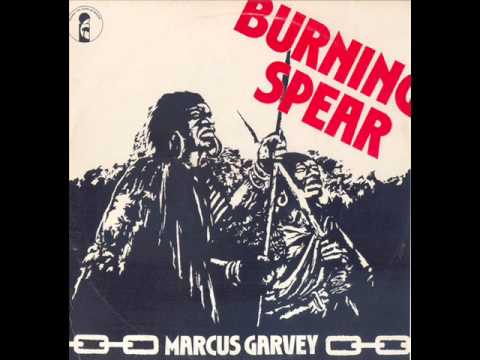
The prophet’s name, set to drums. Press play and feel the ground move.
The story behind the song
Burning Spear is Winston Rodney from St. Ann’s Bay, Jamaica — the same parish as Bob Marley. He got his name from Jomo Kenyatta, the Kenyan leader they called Burning Spear. And he carried that fire his whole career.
In 1975 he made the album Marcus Garvey — named for the Jamaican prophet who told Black people to look to Africa, to be proud, to go back home in spirit if not in body. The title song is the one we’re picking today. It’s not a love song. It’s a history lesson with drums underneath it. Nyabinghi hand drums, deep bass, and a chant that doesn’t let you sit still. Garvey’s message is the whole song. Pride. Africa. Home. Rodney didn’t write a pop song about it. He made a chant you can march to, a lesson you can dance to. That is why it still hits fifty years later.
Rodney grew up in St. Ann’s, listening to the drums in the hills and the preaching in the churches. When he went to Kingston in the late 1960s, he met Bob Marley, who told him to go to Studio One and talk to Coxsone Dodd. He did. He walked in, sang, and got his first records.
But Burning Spear was never trying to be a pop star. While others smoothed out reggae for radio, he kept it raw. He sang about Garvey, about Africa, about slavery days, about the man in the hills who won’t bow down. His voice is not pretty in the usual way — it’s a chant, a warning, a prayer. You don’t just hear it. You feel it in your chest. A pop song wants you to hum it and forget it. This song wants you to remember who you are and where you come from. The chant stays with you after the music stops.
The 1970s were his golden years: Marcus Garvey (1975), Man in the Hills (1976), Dry and Heavy (1977), Social Living (1978). Each one deeper than the last. He toured the world and never changed the message. In 1980 he played at the independence celebration in Zimbabwe, in front of 100,000 people. The roots had come home. Four albums in four years, each one a step deeper into the sound. No chasing the charts, no softening the message. Just the drums, the bass, and the chant, getting stronger every time.
He kept going for 50 years — two Grammys, dozens of albums, and the same fire. He never chased the charts. He stayed roots, and the world came to him. That is the lesson. He didn’t change the sound to fit the radio. He kept the drums, kept the chant, kept the message, and the world learned to listen to him instead.
One Good Song
One good song in your inbox, every week. No noise, just the music.
Unsubscribe anytime. We never share your email.
What to listen for
Listen for the drums first. They are Nyabinghi drums, and they come in three sizes. The bass drum holds the heartbeat. The middle drum, the funde, keeps the pattern steady. The small drum, the kete, plays around them. That is the engine of the song. Bass, drums, and a voice that stays calm and clear over the top. You can hear every part, and every part has room to breathe.
Count the three drums when you listen. The bass drum is the heartbeat, slow and deep, and everything else sits on top of it. The funde keeps the pattern going, steady, never rushing. The kete dances around them, light and quick. Then the bass comes in, deep and warm, and Rodney’s voice floats over the top, calm and clear. Nothing is crowded. Every part has room to breathe, and that is why the groove feels so strong. It is not loud. It is deep. Turn it up and let the drums do the talking.
Listen for the voice, too. It is not pretty in the usual way. It is a chant, a warning, a prayer. Rodney doesn’t push the words. He lets them land, one at a time, over the drums. The chant carries the message, and the drums carry the chant. That is the whole song. Drums, bass, and a voice that will not be moved.
Why I picked it
I play conga, and my dad plays conga too, so that drum sound is home for me. When I hear it in “Marcus Garvey,” I hear Jamaica, I hear Puerto Rico, I hear the same rhythm that has carried people for generations. That is why I picked it for Roots Wednesday. Turn it up, count the three drums, and enjoy the groove.
That’s why he belongs on Roots Wednesday, right next to Augustus Pablo, Laguna Pai, and Cultura Profética. They all grew up on this sound. This is where it started. When you hear “Marcus Garvey,” you hear where roots reggae comes from. The drums, the chant, the message — it all starts here. Augustus Pablo, Laguna Pai, Cultura Profética, they all carry this sound forward in their own way. But Burning Spear is the root. If you want to understand roots, start here. Press play, feel the ground move, and let the prophet’s name do the rest.
Three doors into Burning Spear

“Slavery Days” — from Marcus Garvey (1975). Warm, steady groove from the same album. Watch on YouTube

“Man in the Hills” — from Man in the Hills (1976). Quiet, deep, and heavy with truth. Watch on YouTube

“Social Living” — from Social Living (1978). The groove that says how we should live together — roots with a message you can dance to. Watch on YouTube
Related reading
- Areyto — the ceremonial song and dance of the Taíno (Borikén)
- Batey — the ceremonial plaza (Borikén)
- Bomba y Plena: Puerto Rico's Roots Music
- Smooth Jazz Artists
In the store
If you like Burning Spear’s deep roots groove, the Burning Spear — Marcus Garvey vinyl is in the store. The very record in this story.
One Good Song
One good song in your inbox, every week. No noise, just the music.
Unsubscribe anytime. We never share your email.